Israeli Wines
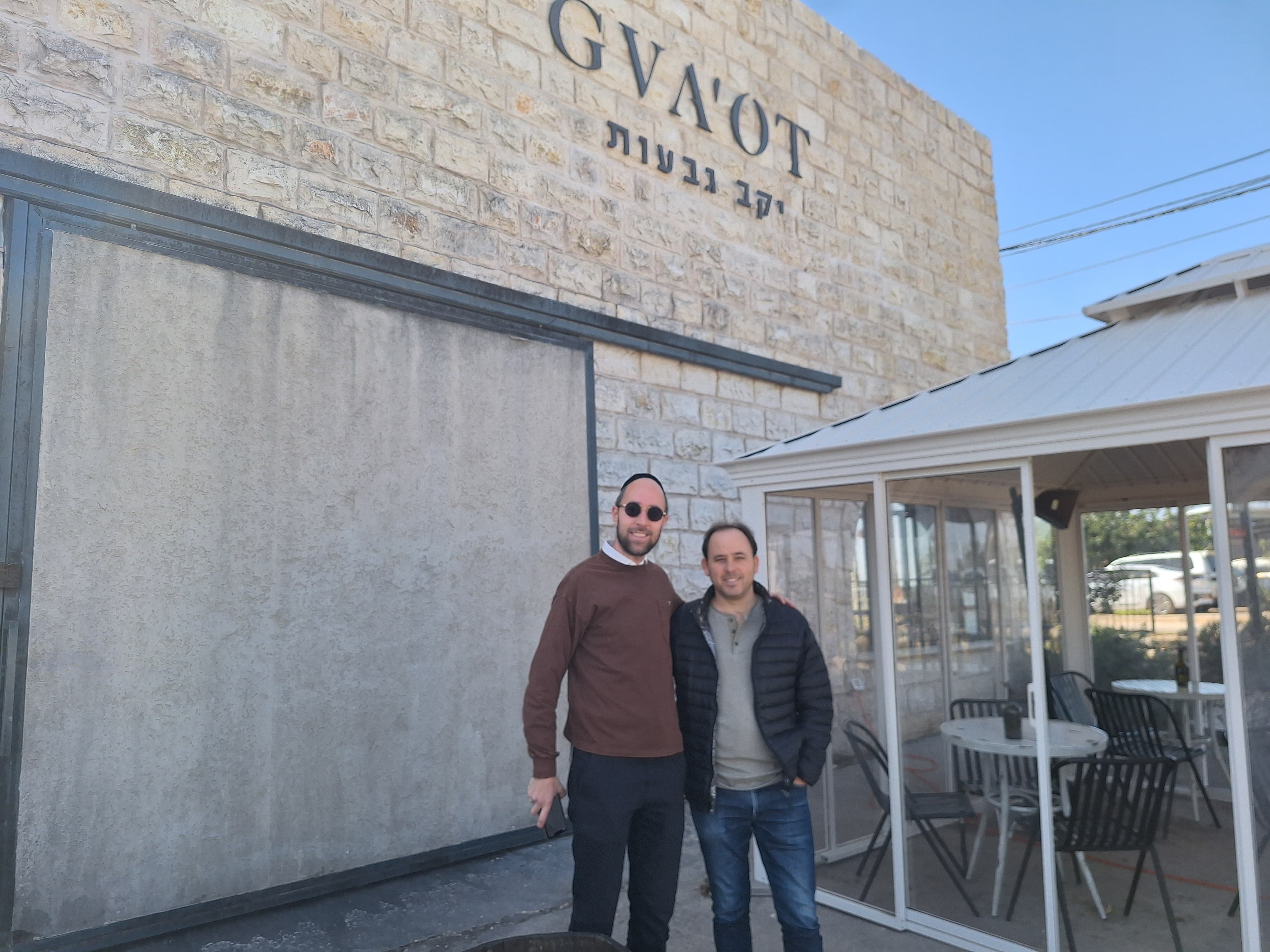

Our visit took us to Gva’ot Winery, a boutique winery located in Givat Harel in the Shomron, overlooking the banks of Nahal Shiloh at an elevation of 780 meters above sea level. This is yet another winery practically in my backyard, combining serious modern winemaking with deep historical roots.
Gva’ot Winery was founded in 2005 by Amnon Weiss and his son-in-law, Chief Winemaker Prof. Shivi Drori.
Shivi Drori grew up in Kiryat Shmona, the son of a rabbi, and later studied agriculture in Rehovot. His winemaking journey began modestly - producing wine in his father-in-law’s cellar in Kedumim, where they lived. The first vintage consisted of just two to three barrels, made from their own grapes.
At the time, the family focused mainly on olives and a single vineyard. Today, Gva’ot Winery produces approximately 100,000 bottles annually and farms 60 dunams of vineyards.
In addition to estate-grown fruit, the winery also sources grapes from Aish Kodesh, a high-altitude, cold region comparable to Jerusalem. Although summers can be hot, the cool nighttime temperatures are ideal for preserving acidity and producing high-quality grapes.
Many people assume wineries slow down after harvest - January proves otherwise.
When I arrived, I noticed barrels lined up outside the cellar. Inside, the winemaking team was busy with winter cellar work: tasting wines, checking quality, and removing sediment. Each barrel is inspected individually to ensure consistency and quality.
The winemaker demonstrated the process by siphoning wine into a glass. I smelled and tasted a Cabernet Sauvignon from the most recent harvest, which will eventually be released as their 2025 Cabernet. It has not yet aged in oak - that will take place over the coming year - but even at this early stage, the wine was fresh, youthful, and surprisingly enjoyable, though clearly still developing.
January is also pruning season in the vineyards. While the wine rests in barrel, the vines are carefully pruned to control yields, strengthen the plant, and lay the groundwork for the next harvest. What happens now in winter directly impacts the quality of the wine a year or two down the line.
The barrels outside the cellar were temporary - except for one.
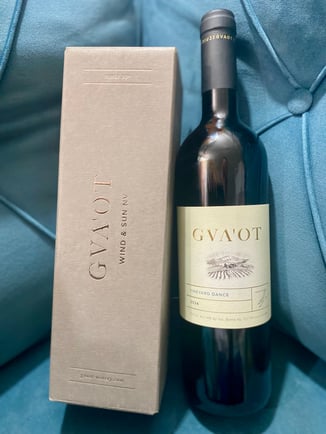
Gva’ot’s Port-style wine, called Wind & Sun NV, has been aging outdoors since 2019. The name reflects reality: the barrel sits outside, exposed to both sun and mountain winds.
Each time wine is drawn from the barrel, it is refilled, ensuring the barrel is never emptied. This continuous topping-off allows the wine to evolve while maintaining consistency and depth over time.
I later met CEO Eliav Miller, who hosted us for a tasting alongside a cheese platter.
We began with the Rosé - aromatic and floral, light-bodied with pretty, refreshing fruit.
Next was the Petit Noir, an uncommon varietal and an excellent opening wine - approachable, elegant, and easy to enjoy.
Then came a standout: the Cabernet Reserve 2017.
Deep aromatics, balance, structure, and complexity - a wine that instantly explains why certain bottles command higher prices. This is a wine for a special occasion, and it delivers.
The vineyard tour was led by one of the winery’s workers, who was actively pruning the vines as we walked through the vineyards - a perfect way to see the vineyards at work rather than staged for visitors.
He pointed out which parcels supply grapes for the Gva’ot, Gofna, Mesada, and Raz series, determined by vine age, altitude, and placement on the mountain.
I saw vineyards of Riesling, Cabernet Sauvignon, Petit Verdot, and Petit Noir. We paused to take in the view from 780 meters above sea level, overlooking Nahal Shiloh - the stream that feeds the Shomron and eventually connects to the Yarkon River, flowing into the Mediterranean.
At one point, he warned us not to touch a nearby gate - it was electrified to prevent rabbits from damaging the vines.
He bent down to show me the soil: chalky limestone (gir). The rock contains natural pockets that retain water, allowing vines to survive hot, dry conditions. This terroir is ideal for producing quality grapes.
Off the beaten path, we visited an ancient wine press (gat) dating back over 3,000 years, from before the First Temple period. The structure clearly shows where grapes were pressed by foot and how the juice flowed into a central pit for fermentation.
Its location makes perfect sense - close to Mishkan Shiloh, where wine was needed for korbanot. Transporting heavy jugs of wine from Jerusalem would have been impractical.
Nearby, we explored a large ancient cave, likely used as a cellar or dwelling. Before the visitors center was built, Gva’ot would host tastings here - wine and cheese surrounded by history.
Gva’ot is actively involved in reviving indigenous grape varieties from the Temple era. In collaboration with a laboratory in Ariel, several wineries are researching ancient vines.
Gva’ot received exclusive access to two varieties:
Betuni — a light red, Pinot Noir–like grape with large clusters and pulp
Gendali Chamdali — an ancient white grape
Both varieties date back over 2,000 years.
During the cellar tour, I also saw a new sparkling white wine scheduled for release soon (name still to be announced). The winery uses a mix of French, American, and Hungarian oak barrels, selected carefully for each wine style.
Gva’ot Winery produces four distinct series:
Gva’ot Series
Entry-level wines — elegant, approachable, with red and black fruit, spice, and floral notes.
Gofna Series
Reserve wines — more refined and varietal-driven, with longer aging and added complexity.
Mesada Series
The flagship line — powerful, structured Bordeaux-style blends aged 20–24 months, with excellent aging potential.
Raz Series
The super-premium line — limited-edition wines from the best barrels of the vintage, aged about two years in French oak. The pinnacle of the winery.
Hierarchy:
Gva’ot → Gofna → Mesada → Raz
Before leaving, I made sure to buy:
Gva’ot Mechol HaKramim (Vineyard Dance) 2024 — a blend of Petit Verdot, Cabernet Franc, Cabernet Sauvignon, and Merlot
Price: 119 NIS
Wind & Sun NV — Gva’ot’s Port-style wine, a blend of Petit Verdot, Cabernet Sauvignon, and Merlot
Price: 159 NIS
As a lover of Port wines, that second bottle was non-negotiable.
Clarification: Gva’ot Winery is located in Givat Harel and should not be confused with the yishuv named Gva’ot near Efrat.
Kosher Wine School - Exploring the vineyards and wineries of the Holy Land