Israeli Wines

Driving north on Kvish 60, the central spine of the Shomron, you pass between Kfar Tapuach and Eli before taking the turn toward Rechelim. The road feels quiet today, but this landscape carries memory. Like many communities in this region, Rechelim was not founded as a real-estate project or a scenic retreat. It was born out of loss, conviction, and the refusal to let tragedy be the final word.
Rechelim was founded in 1991, following tragic attacks on Israeli buses during protests against the Madrid peace negotiations, talks that would later lead to the Oslo Accords. It was named in memory of Rachel Drouk and Rachel Weiss, two young women killed in separate attacks. The site of grief grew into a permanent settlement, rooted in determination and presence.
It is here, in a place shaped by memory and resilience, that Tura Winery would later take root.
Living in the Shomron, wine is never just a beverage. It is history, land, faith, and work poured into a glass. My most recent winery visit brought me to Tura Winery, located in Rechelim, with vineyards planted on the southern ridge of Mount Gerizim, within the Har Bracha settlement, at an elevation of 850 meters above sea level. This high-altitude, mountainous region is one of Israel’s most distinctive wine-growing areas, and it leaves a clear imprint on the wines themselves.
Tura Winery was founded in 2003 by Vered and Erez Ben-Saadon, though the story begins earlier. The first vineyards were planted in 1997, starting with 20 dunams (approximately 5 acres). Vineyard development has continued ever since, and today Tura farms over 800 dunams of vineyards.
The grape varieties include Cabernet Sauvignon, Cabernet Franc, Merlot, Shiraz, Petit Verdot, Pinot Noir, Chardonnay, Sauvignon Blanc, Gewürztraminer, and Viognier.
Vered and Erez are deeply attached to the Land of Israel and work with exceptional care and intention. Just six months after their marriage, they invested all their savings into purchasing their first vineyard plot in Har Bracha. At first, they sold their grapes to other wineries, including one of Israel’s largest, but they soon realized that true quality required full control. That decision led them to make wine exclusively from their own grapes.
Both Vered and Erez studied winemaking at Tel-Hai College and Ariel University. In 2003, after purchasing professional equipment, they officially established Tura Winery in Rechelim.
In the first year, the winery produced 1,200 bottles, followed by 2,800 bottles in the second year. When Tura began, the winery operated with just four barrels, marking the true starting point of their independent winemaking journey.
Last summer, Tura produced approximately 280,000 bottles, all from estate-grown grapes.
Erez’s parents immigrated to Israel from Morocco and Iran. He grew up in Jerusalem and later moved to Kochav HaShachar. During his army service, he served in the Paratroopers, and after his release, he returned to his first love: agriculture and working the land.
Before grapes, Erez planted apples. Today, he oversees every stage of production at Tura, from vineyard management and harvest decisions to winemaking and marketing. His choice to establish a winery with Vered was deliberate and carefully planned.
When Erez touches the stones in the vineyard, he feels the fulfillment of the biblical prophecy:
“You shall yet plant vineyards on the mountains of Samaria; those who plant them shall enjoy the fruit.”
(Jeremiah 31:5)
Vered’s family history is extraordinary. Her grandmother, Licha de Parise, was a Dutch Jew who was just fifteen when World War II began. During the war, her family hid in various locations. Licha was separated from her parents and spent time hiding on an island in northern Holland, where she kept a diary reminiscent of Anne Frank.
After the war, Licha married a Jewish Holocaust survivor and raised a family. Vered was born in Holland and was not Jewish at birth. Her parents wanted her school to teach Jewish concepts, but when that did not happen, the family made aliyah. After immigrating to Israel, Vered converted to Judaism.
She met Erez toward the end of eighth grade, and they kept in touch through postcards for years, until they married when Vered was in twelfth grade and Erez was completing his army service.
In 1997, the young couple chose to live in Har Bracha in order to farm the land. They invested the money they received as wedding gifts to purchase their first 20 dunams of vineyard land. Erez’s father helped buy a tractor, Vered’s grandmother and aunt purchased grape seedlings, and friends and volunteers planted the vineyard by hand, working from dawn until dusk.
In accordance with kashrut requirements, after four years they began to sell grapes. One of Israel’s largest wineries became their client. Only in the summer of 2003 did they establish Tura Winery.
Before Tura, the winery briefly operated under the name “Erez”, beginning in 2002 and operating out of a tent. When Tura was established, the winery began its work with four barrels and a clear vision.
The name Tura comes from the Gemara, where the phrase “Tura Brichta” refers to Har Bracha - the Mountain of Blessing. Since their grapes grow on this mountain, the name reflects both place and purpose.
The winery building in Rechelim was originally constructed by the first residents of the yishuv. Every member of the Ben-Saadon family, including the children, participated in building the winery by hand, in an atmosphere of love and joy. Even the children’s names reflect vineyard life and intention. One son is named Yonatan Karmi, from karem, meaning vineyard. Another is Hillel Simadar, Simadar meaning vine blossoms, and Hillel expressing the intention to praise the Land of Israel through its fruits and agricultural products, which lies at the very heart of why the Ben-Saadons make wine.
The vineyards sit at 850 meters above sea level, open to western winds, with fog lingering until late morning. Summer nights can reach 16°C with humidity as high as 98%, while winter temperatures can drop to –4°C and occasionally bring snow. The rocky terra rossa soil and dramatic day–night temperature differences intensify flavor, aroma, and color, resulting in wines with depth and complexity.
Harvest timing is determined by Brix levels, measuring sugar in the grapes. The first liquid is tirosh, which flows into stainless steel tanks. Fermentation occurs with yeast in warm conditions. The wines are then aged exclusively in French oak barrels. Each barrel costs approximately €900, is used for three cycles, and produces about 300 bottles.
Tura wines are categorized by capsule color. White capsules indicate entry-level wines aged six to ten months in barrel. Red capsules represent single-varietal wines aged twenty-two months. Black capsules indicate blends of four grape varieties, also aged twenty-two months, and sell for approximately 236 shekels at the winery, often for less in retail stores.
Pricing reflects the amount of work invested, the richness, fruit concentration, weight, and long finish—like a well-made shirt that lasts.
During my visit, I toured the winery and tasted wines, including the 2025 Rosé, which had not yet been bottled. I asked to taste it and was poured wine directly from the stainless-steel tank. It was exceptionally fresh, vibrant, and slightly sweeter than previous vintages.
This Rosé is Vered’s specialty, fittingly so, as Vered means rose. Even the bottom of the bottle is designed like a flower rather than the usual circle. All other wines are made by Erez.
Tura has also begun growing olives in Nachal Shilo. Their olive oil reaches 0.3 acidity, an exceptional result. Olive oil takes one year from growth to pressing, completed in a single day.
At the visitor center, the guide explained how to properly taste wine: the first sip clears the palate, the second sip is swirled around the mouth, breathing in gently while the wine rests on the tongue, followed by swallowing and focusing on the finish.
Two thousand years ago, this land was filled with vineyards. Over time, vineyards were uprooted and replaced with olive trees. Seeds from the time of the Beit Hamikdash were found near Shilo and planted at Ariel University, though the resulting wine was not particularly successful.
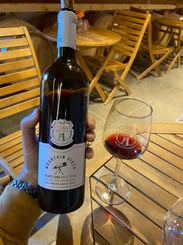
One of Tura’s most symbolic wines is Victory, released during the current war. It is the same wine as Mountain Peak, labeled differently and sold in a blue box for approximately 286 shekels.
Visiting Tura Winery makes one thing very clear: this is not a winery built around trends, marketing slogans, or quick success. It is built around purpose. Every vineyard planted, every barrel filled, and every bottle released is an act of connection—to the land, to Jewish history, and to the belief that agriculture in Israel is itself a form of praise.
When you drink a Tura wine, you are not only tasting altitude, climate, and craftsmanship. You are tasting an intention: to honor the Land of Israel through its fruits and to transform blessing into something tangible, shareable, and enduring.
That is what makes Tura more than a winery—and why it stays with you long after the glass is empty.
Kosher Wine School - Exploring the vineyards and wineries of the Holy Land